
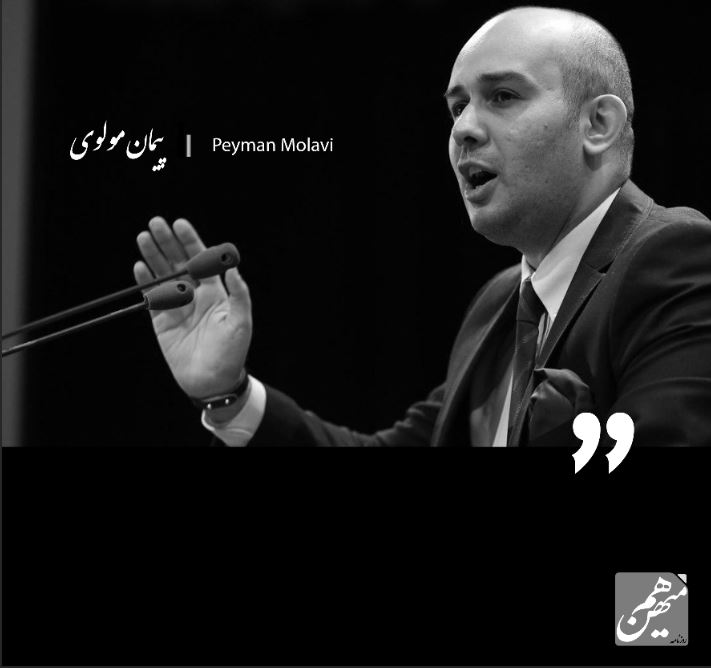
Peyman Molavi
Graduate of the University of Sussex, England
Founder of Molavi Capital
Founder of Molavi Academy
Author of the book The Dance of Markets

A potential exit of the United Arab Emirates from OPEC / OPEC+—if it materializes—would not merely be an institutional shift; it would signal a change in the power geometry of the global oil market. The implications of such a shift could range from increased price volatility to a redefinition of the roles of key players such as Iran and Saudi Arabia.
In the short term, this move could lead to greater uncertainty and, consequently, more volatile oil prices. One of OPEC’s primary functions has been to manage supply in order to mitigate price shocks; weakening this mechanism would push the market toward more competitive and less predictable behavior. The UAE, with its spare capacity and ambitious development plans, would likely seek to act more independently and take advantage of price opportunities to increase its market share.
For Iran, this development would not necessarily represent a straightforward opportunity but rather a more complex equation. With sanctions continuing to cast a shadow over Iran’s oil exports, increased supply from a player like the UAE could intensify competition in both gray and formal markets. In other words, the UAE’s exit could constrain Iran’s room for maneuver in the short term—unless Iran can redefine its position through energy diplomacy or market diversification.
In the long term, however, such a decision would primarily serve Abu Dhabi’s strategy to expand production capacity and solidify its position as a flexible, technology-driven producer. The UAE has been investing for years to boost its production capacity to over 5 million barrels per day, and freeing itself from OPEC’s restrictive frameworks could accelerate this trajectory....
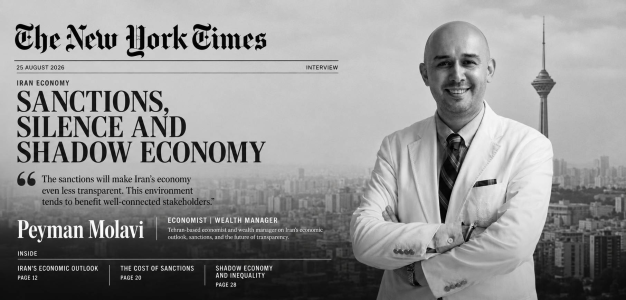
“The sanctions will make Iran’s economy even less transparent” said Peyman Molavi, an economist based in Tehran. “This environment tends to benefit well-connected stakeholders.”
Peyman Molavi | Economist | wealth manager NYTimes | interview 25 August 2026

If restrictions on Iran’s oil exports are lifted, exports would likely recover quickly but gradually. Initially, stored crude would be shipped, and within a few months export levels could increase significantly, although a full return to pre-crisis conditions would depend on political factors, shipping insurance, and Asian market demand. The current priority of Iran’s oil sector is maintaining production stability, managing inventories, preventing damage to oil fields, and retaining foreign customers. If disruptions continue, losses would include not only direct revenue declines but also infrastructure costs and indirect impacts such as higher insurance risks, deeper discounts on Iranian crude, and reduced market share.
The trend of devaluation of the rial in Iran, like all countries facing devaluation of their currency, is due to "inflation" which is growing exponentially.
Point-to-point inflation has reached more than 52% in the past month, and this was predictable. The reason for predictability is two important components:
The sharp growth of the Central Bank's M2 liquidity in the past few months, which has grown to more than 36%, and the sharp decline in economic growth.
Liquidity growth has always existed in Iran, but after the first round of nuclear sanctions from 2011 to today, M2 liquidity in Iran has increased 31 times, while the average economic growth has been at most 1%, which has led to stable inflation.
The sharp decline in oil revenues, along with the deep recession that has brought economic growth, makes the trend of devaluation of the rial stable and certain.
There are several reasons for the fluctuations these days, one is the lack of export dollars returning to the country, which is attributed to export trusts, and the more important reason is the decrease in oil exports. Also, the government's 2015 budget itself reflects the weakening of economic power, with 70% of oil revenues showing a decrease and 60% referring to higher tax revenues. Therefore, the devaluation of the rial is inevitable with continued rising inflation above 60%....
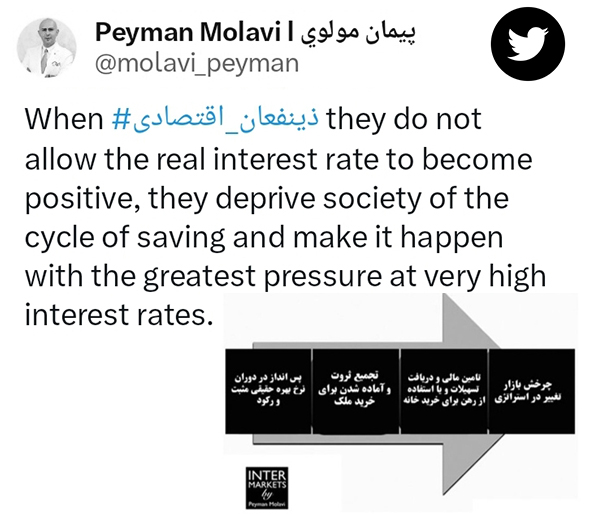
Economic stakeholders
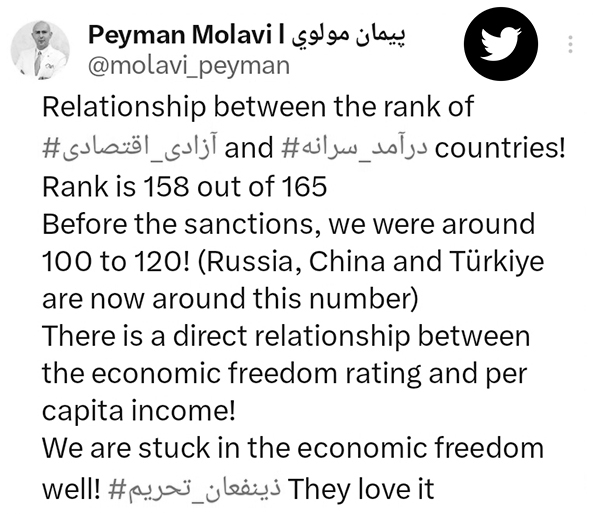
Economic Freedom Ranking and Per Capital Income of Countries
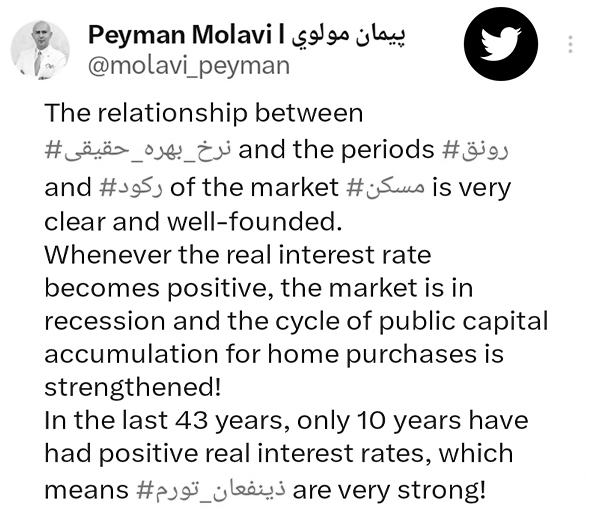
Real Interest Rate
Draining the growth of the dollar rate in the housing market
The increase in the price of the dollar always affects financial markets and in the medium term, it will cause the markets to experience price jumps, and as a result, the country's liquidity will also increase, and as a result, we will witness inflation growth in the country

Should we wait for the fall of the currency market
The exchange rate increased to 85,000 Tomans at the end of 1403. He said that the unofficial market exchange rate should not have reached 100,000 Tomans at all. However, in a situation where the world is facing trade war and severe military conflicts, the dollar rate reached 100,000 Tomans, while considering economic indicators, it should not have reached these prices at all.
Dollar Price Forecast for1404/
Should We Expect a Currency Market Crash?
Draining the growth of the dollar rate in the housing market

Real financial and economic advice
If you are thinking about investing — whether it's selling a large asset or turning your cash into a better opportunity — we are here to help you, without bias, based solely on market logic and economic conditions.

Financial and economic consulting for small and large businesses
By carefully analyzing your financial situation and business structure, we provide practical solutions for growth, improving profitability, and making key decisions. Our goal is to help you move on the path to sustainable development with confidence and awareness