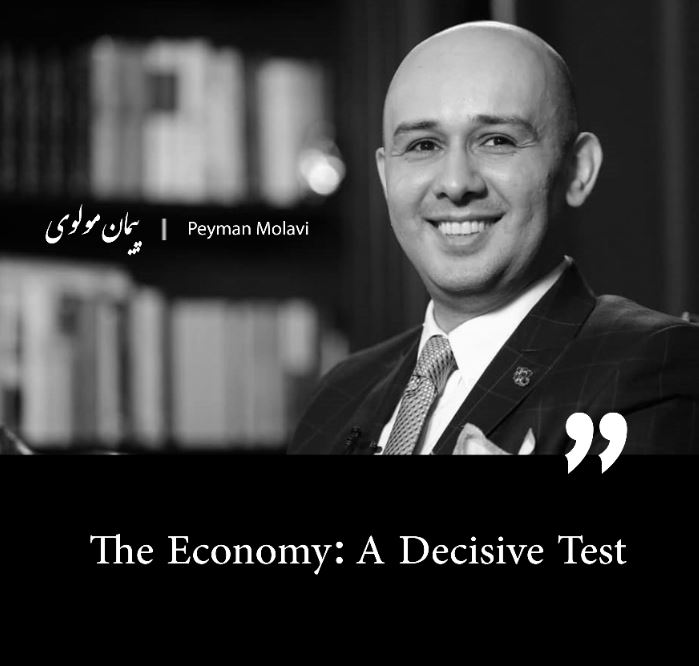
The Economy: A Decisive Test Economist Peyman Molavi argues that Iran’s greatest economic challenge at the beginning of its new phase is not inflation or the exchange rate alone, but rather a crisis of economic confidence. In an interview with Al Jazeera, Molavi said that investment—whether domestic or foreign—only takes place when investors can reasonably predict the future. In his view, Iran’s economy faces four major structural challenges: persistent inflation, a structural budget deficit, imbalances in the banking and energy sectors, and capital flight. Unless these issues are addressed simultaneously, any economic growth will remain temporary. According to Molavi, Iran’s top priority should be rebuilding confidence, ensuring policy stability, and protecting property rights. From this perspective, economic success should not be measured merely by stabilizing the exchange rate or achieving a temporary decline in inflation. He believes that the public’s primary concern is purchasing power. People do not experience inflation or exchange rates as abstract statistics; they experience them through their impact on everyday life. Even if inflation falls, people will not feel any improvement unless their real incomes increase. Likewise, sustainable job creation cannot occur without investment. Therefore, Molavi considers rising real household incomes and stronger purchasing power to be the most meaningful indicators of economic success, rather than short-term exchange rate stability. Regarding sanctions and foreign policy, Molavi describes them
as “a necessary but insufficient condition.” Easing external restrictions can lower transaction costs, facilitate exports and capital inflows, and improve access to international financial resources. However, he argues that sustainable growth will remain out of reach without domestic institutional reforms, including legal stability, central bank independence, and a better business environment. Molavi points out that the experience of many countries demonstrates that the quality of economic governance is ultimately more important than the temporary removal of external restrictions. He also notes that Iran’s poor ranking in economic freedom indices reflects the strong influence of entrenched vested interests within the economy. Looking ahead, Molavi argues that transforming the economy requires a change in mindset as much as policy. Immediate measures—such as managing the foreign exchange market, reducing the budget deficit, and controlling liquidity—may prevent the crisis from worsening, but they cannot generate sustainable growth on their own. In his view, lasting growth depends on improving the investment climate by protecting capital, expanding trade freedom, reducing unnecessary state intervention, reforming the tax system, developing capital markets, and reconnecting Iran to global value chains. Without these structural reforms, short-term policies merely buy time rather than solve the underlying problems. Molavi concludes that meaningful economic transformation will remain elusive unless risks decline and economic policymaking becomes more rational and institutionally grounded.